Cerne Abbas Giant
Castles & Heritage Sites in Cerne Abbas
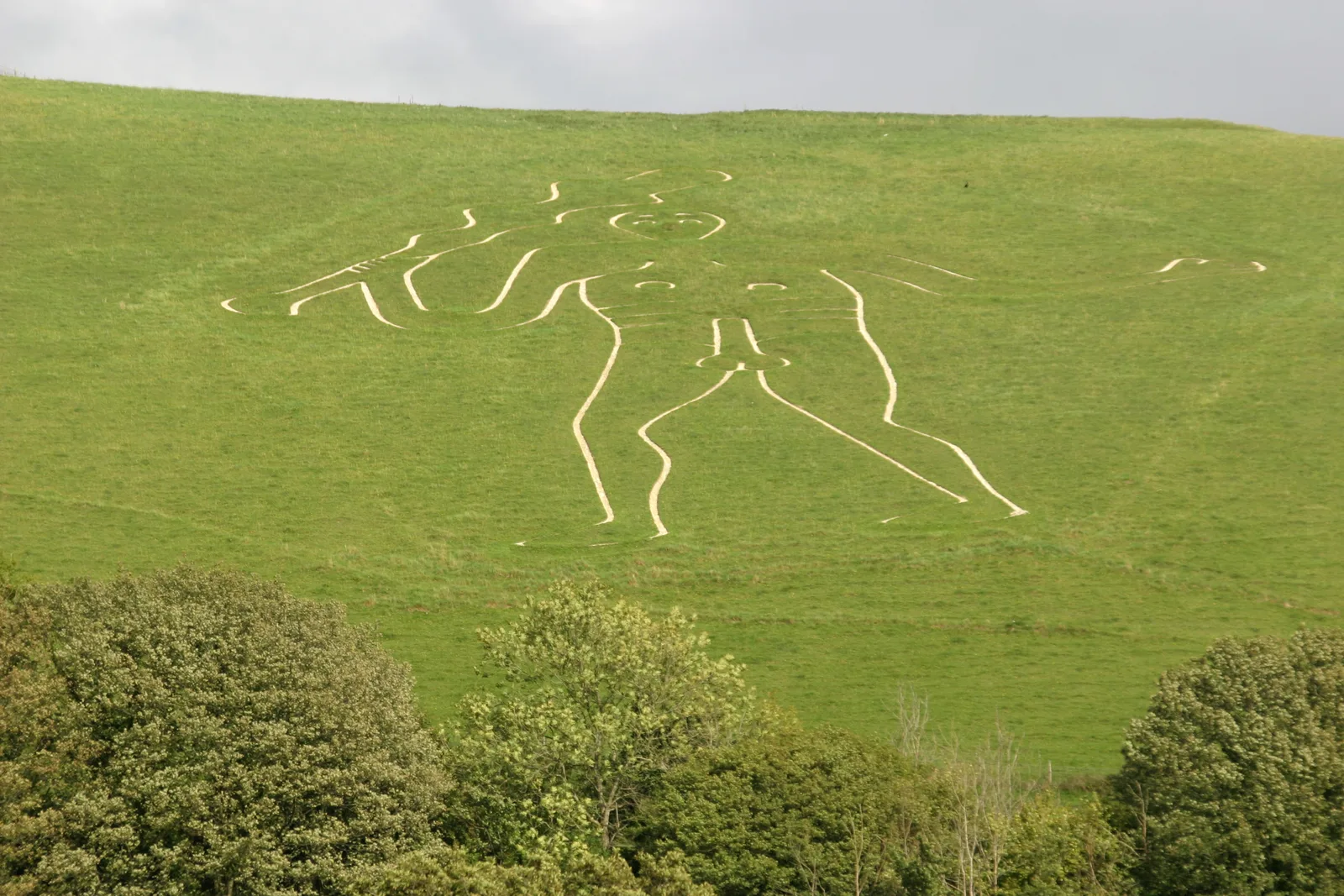
Britain's largest chalk hill figure, 180ft tall on Giant Hill above Cerne Abbas. Free to view from the viewing area off the A352. Dogs on leads.
Stay near Cerne Abbas Giant
3+ cottages in Cerne Abbas
Britain’s largest chalk hill figure
The Cerne Giant is a naked, club-carrying figure cut into the chalk of Giant Hill, above the village of Cerne Abbas. He is 180ft (55 metres) tall, and the National Trust calls him Britain’s largest chalk hill figure. The Trust has cared for him since 1920. The site is a Scheduled Monument and a Site of Special Scientific Interest.
Above the Giant’s head sits the Trendle, a rectangular earthwork thought to date from the Iron Age. Local morris dancers still use it for their May Day celebrations.
How old is he?
For centuries nobody knew. Theories ranged from a prehistoric god to a 17th-century insult aimed at Oliver Cromwell. From 2019 the National Trust worked with the University of Gloucestershire and Allen Environmental Archaeology to date the soil inside the outline. Material from the deepest layer, about one metre down, gave a range of 700 to 1100 AD.
That makes the Giant late Saxon, and it rules out a prehistoric or Roman origin. Cerne Abbey was founded nearby in 987. The earliest written record of the Giant comes much later: a churchwarden’s account of repairing him in 1694.
Seeing the Giant
You cannot walk on the figure. Access is restricted because every footstep speeds up erosion, and the slope is steep chalk and grass that turns muddy after rain. The National Trust says the viewing area in the car park off the A352 gives the best view. The free lay-by on the A352 is not run by the Trust and gives only a limited view.
From the centre of Cerne Abbas a signposted footpath leads a quarter of a mile to the viewing area. The site is open from dawn to dusk. Winter is the best season to see him, because the grass grows less, and the Trust notes that the outline can look faint at other times.
Re-chalking and sheep
The outline is filled with chalk, which is replaced by hand when it wears thin. The National Trust now re-chalks the Giant every seven to ten years, using 17 tonnes of chalk, against once every 25 years or so in the past. The last re-chalking pictured on the Trust’s site was in September 2019.
Sheep do the mowing. A local farmer brings a small flock onto the fenced enclosure, and the Trust says about 50 sheep graze there, usually between May and June. During the Second World War the Giant was covered over so that enemy aircraft could not use him as a landmark.
In the village
Cerne Abbey was founded in 987 and is now a private estate. Its medieval Guest House and Tudor Abbot’s Porch still stand, and the estate lists entry at £5 for adults, with children under 16 free. St Augustine’s Well is free and is reached on foot from Abbey Street, about 100 metres from the abbey. It is ringed by lime trees known locally as the Twelve Apostles.
Getting there
The Giant is signposted off the A352, 8 miles north of Dorchester and 10 miles south of Sherborne. The car park is flat tarmac with one accessible parking space. The nearest stations are Maiden Newton, 6 miles away, and Dorchester South and Dorchester West, both 8 miles away. Buses between Dorchester and Sherborne stop in the village, so check the current timetable before you travel. Dogs on leads are welcome.
For somewhere to stay, see cottages in Cerne Abbas. The Giant sits between Dorchester, 8 miles south, and Sherborne, 10 miles north, home of Sherborne Castle and Gardens.
Tickets and prices
Free to view. The A352 lay-by is free and is not managed by the National Trust.
Where to stay near Cerne Abbas Giant
Sample dates: next Friday to Sunday. Adjust below to see live prices for Cerne Abbas.
Good to know
Frequently asked questions
- Can you walk on the Cerne Abbas Giant?
- No. The National Trust restricts access to the figure to stop the ground eroding, and the Giant sits on a very steep slope of grass and chalk that gets muddy after rain. A fence of about half a kilometre surrounds it. Look from the viewing area or the hills nearby instead.
- Where is the best place to see the Giant?
- The National Trust says the viewing area in the car park off the A352 gives the best view. The free A352 lay-by gives only a limited view, and the Trust suggests the nearby hills for a better vantage point.
- How old is the Cerne Abbas Giant?
- Sediment dating published by the National Trust in 2021 gave a range of 700 to 1100 AD from the deepest layer, about one metre down. That points to the late Saxon period and rules out a prehistoric or Roman origin. The earliest written record is a churchwarden's account of repairing the Giant in 1694.
- Can I bring my dog?
- Yes. The National Trust welcomes dogs on leads.
- When is the Giant easiest to see?
- The National Trust says winter is the best time, because the grass grows less. In summer, and between re-chalkings, the outline can look faint.