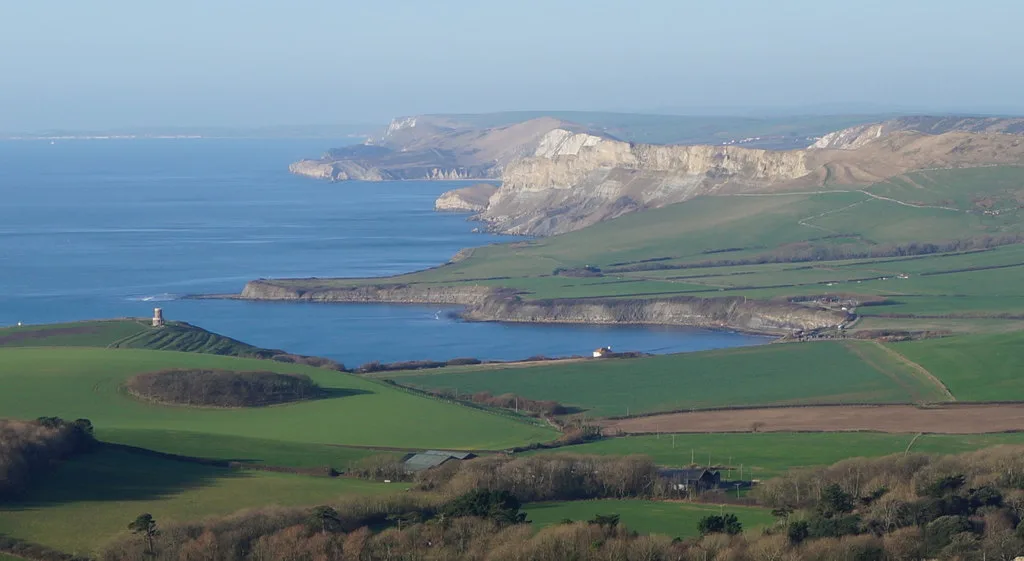
Photo: Peter Elsdon / Geograph, CC BY-SA 2.0
Kimmeridge Bay
A rocky Purbeck bay of shale and limestone ledges with a summer snorkel trail, a Dorset Wildlife Trust marine centre and a private toll road in.
At a Glance
Beach Type
rocky
Dogs
Yes - year-round
Parking
Available
Access
Moderate (steps/path)
Swimming
Swim with caution
Facilities
Activities
Not a bucket-and-spade beach
Kimmeridge Bay is a rocky stretch of the Isle of Purbeck, and that is its appeal. The beach is mostly shale, with large limestone ledges running out into the water. Dorset National Landscape calls it not a classic bucket and spade beach, and the limestone ledges are what make it a good place for rock pooling. The bay is also the type locality for the Kimmeridge Clay, a Late Jurassic rock formation.
Snorkelling and the Wild Seas Centre
The bay is a Marine Conservation Zone, and the Dorset Wildlife Trust runs the Fine Foundation Wild Seas Centre beside the slipway. It has aquaria and displays, and it hires equipment for the underwater trail: five buoys across roughly 400 metres of shallow water, in place from May to September. The centre is open in the warmer months and closes for winter, so check its page for current dates. Visitors are asked to follow the Seashore Code.
Fossils, cliffs and tides
Fossils turn up on the ledges, and the bay is known for them. The land belongs to the Smedmore Estate and the bay is a Site of Special Scientific Interest. The Etches Collection states that hammering the cliffs and shale beds is strictly forbidden, though loose fossils on the foreshore may be collected.
Keep a sensible distance from the foot of the cliff, because rock falls occur, and take care on the ledges, which can be slippery. Tides can also cut people off along this shore, particularly on walks beyond the bay toward Chapman’s Pool, so check tide times first.
Treat swimming with caution too, and read the rules on the Kimmeridge Bay site: no spearfishing, no jet skis, and no BBQs, fires or gas stoves.
Dogs
Visit Dorset lists dogs as welcome all year, off lead, and the bay’s own site says well-behaved dogs are welcome (please pick up after them). Keep dogs on a lead near the cliffs and livestock. Because dog rules on Dorset beaches are set by council order, check Dorset Council’s dog page before travelling.
Getting in, parking and facilities
The bay and its car park are reached by a privately owned and maintained road from Kimmeridge village. Vehicles pay a toll at the toll hut, with the charge going to the Smedmore Estate. Walking or cycling in is free. The road and main car park are open daily until dusk. The current tariff is on the Kimmeridge Bay website.
Toilets, including disabled toilets, are in the slipway car park, and there are refreshments and a picnic area.
Nearby
The South West Coast Path runs through the bay. West leads to Tyneham village and Worbarrow Bay, and the Georgian Clavell Tower stands on the cliff edge to the east (it is not open to visitors). Military range closures may affect the westward route, so check before you set out.
Good to know
Frequently asked questions
- Do you have to pay to get to Kimmeridge Bay?
- Vehicles pay at the toll hut on the private road from the village, and the car park charge goes to the Smedmore Estate. Getting there on foot or by bike is free. Check the current tariff on the Kimmeridge Bay website.
- Are dogs allowed at Kimmeridge Bay?
- Visit Dorset lists dogs as welcome all year, off lead, at Kimmeridge Bay. Council dog orders can change, so check Dorset Council's beach dog page before you go.
- When does the snorkel trail run?
- The marked trail of five buoys runs from May to September. Equipment hire is at the Wild Seas Centre, which closes for the winter, so check its opening dates before you go.
- Can I hammer for fossils at Kimmeridge?
- No. Hammers are not allowed at Kimmeridge, and the fossil code there only allows you to pick up loose fossils from the foreshore.